
Environmental compatibility

Are vibration dampers toxic? Rubber and rubber-metal elements are harmless when used properly, even during operation. In general, all items comply with the directives REACH – 1907/2006/EG RoHS – 2011/65/EU If this is not the case in exceptional circumstances, a note will be included in the item description.
Polyurethane (PU / PUR)
What is polyurethane (PU / PUR)? Polyurethane (abbreviation PUR, in common usage also PU for short) is a synthetically produced elastic plastic similar to natural rubber. AU (polyester urethane) is mostly used in vibration control technology. In addition, there is the waterproof type EU (polyether urethane). PU is a synthetic polymer and is used in […]
Maintenance

Do vibration dampers need to be serviced? Rubber-metal elements are usually maintenance-free. No special maintenance is required during use. Checking the rubber-metal articles for damage can be done during a normal inspection (1x per year).
Cleaning

How can vibration dampers be cleaned? For cleaning the rubber surface we recommend soap and warm water. A 1.5% solution of sodium carbonate can also be used. Aggressive solvents must not be used. Cleaning with sharp-edged tools such as wire brushes or similar is not permitted.
Storage

How should a vibration damper be stored? All rubber and rubber-metal elements should be stored in a dry, cool and dark place. Articles made of PU/PUR should not be stored in plastic bags. Further information can be found in the ISO 2230 and DIN 7716 standards.
Mounting

What must be observed when installing a vibration damper? The rubber-metal elements and vibration dampers must be installed with the usual care, using suitable tools and in a suitable manner without applying excessive force. Damage to the surface of the item caused by foreign objects or tools and the trapping of foreign objects between the […]
Damping
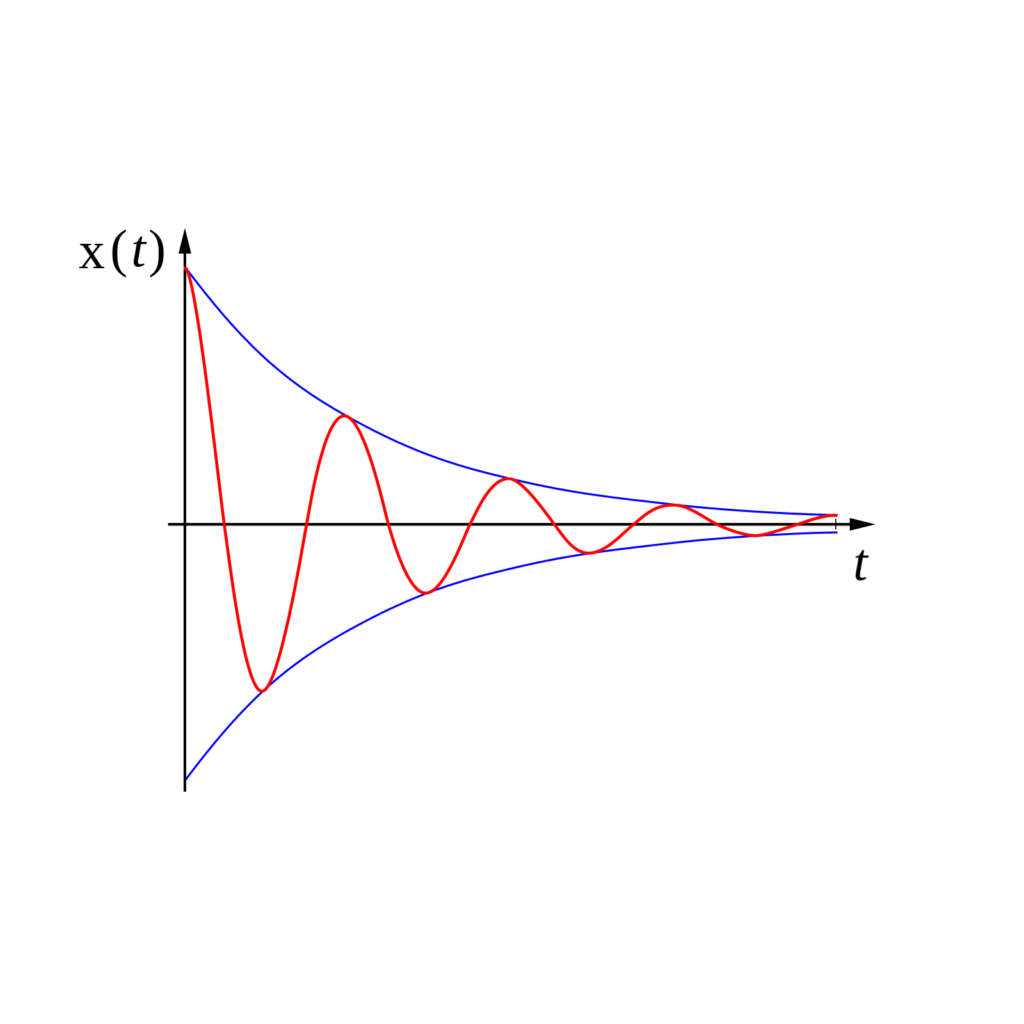
What is damping? The damping describes the energy loss of the vibration through a rubber article. Vibrations or impacts apply energy to the rubber-to-metal article, causing it to deform. When deformation occurs due to the application of force, the molecular chains of the rubber / elastomer rub against each other and thus “brake”. The energy […]
Tolerance table molded parts
What tolerances do rubber articles have? No component can be manufactured with absolute accuracy. The tolerances are based on the relevant DIN and ISO standards. For rubber and rubber-metal articles the standard DIN ISO 3302 is valid. Standard components are manufactured with tolerance class M3, rubber-metal rails usually with class M4. Here is an excerpt […]
Settlement (permanent deformation)
What is settling? Pressure resistance refers to the resistance of a sample to pressure. It can therefore also be seen as spatial compactness. After removing the applied force elastomers are able to return to their original position. The distance that is lost in the expansion is also referred to as the compression set. The compression […]
Liability
What is liability? Adhesion indicates the strength with which two substrates adhere to each other. The substrates can be two elastomer surfaces or an elastomer and an adhesive film. Often the normal force is also referred to, which, depending on a unit area, is necessary to separate an adhesive film from the substrate. In a […]
Elasticity
What is elasticity? Elasticity describes the property after which deformation to return to its original position. As the name suggests, elastomers are elastomers are known for their high elasticity. You obtain these through vulcanization . The ability to bounce off a foreign body is called rebound resilience is called rebound resilience. You can also compare […]
Shore hardness
What is Shore hardness? Shore hardness is a defined measurement that indicates the relative resistance of the surface to indentation by a defined body with a given load. The Shore A test is usually carried out with a truncated cone needle. The test is standardized in DIN ISO 7619, DIN 53505 or ASTM D 676. […]
Natural rubber (NR)

What is natural rubber (NR)? Natural rubber is the most commonly used elastomer for vibration dampers. It is characterized by very high tensile strength rebound resilience and elasticity , flexibility at low temperatures and dynamic properties. A combination that has hardly been matched by any synthetic rubber achieved to date. The main ingredients are natural […]
History
History of rubber Discovery of the elastic material Long before the first European explorers reached the American continent, the indigenous peoples of Central America, such as the Aztecs and Mayans, knew about the sap of the “weeping tree”. They called the tree “caao-chu”, so that our rubber developed from the French word “caoutchouc”. They used […]
Fluorine rubber (FKM)
What is fluororubber (FKM)? Fluororubber is a synthetic elastomer that is particularly resistant to high temperatures and many chemicals, including hydrocarbons. It has excellent resistance to ageing. Most applications for FKM are found in sealing technology. Fluororubber is also frequently used in vacuum technology because FKM has a very low permeation rate (gas penetration). FKM […]


